
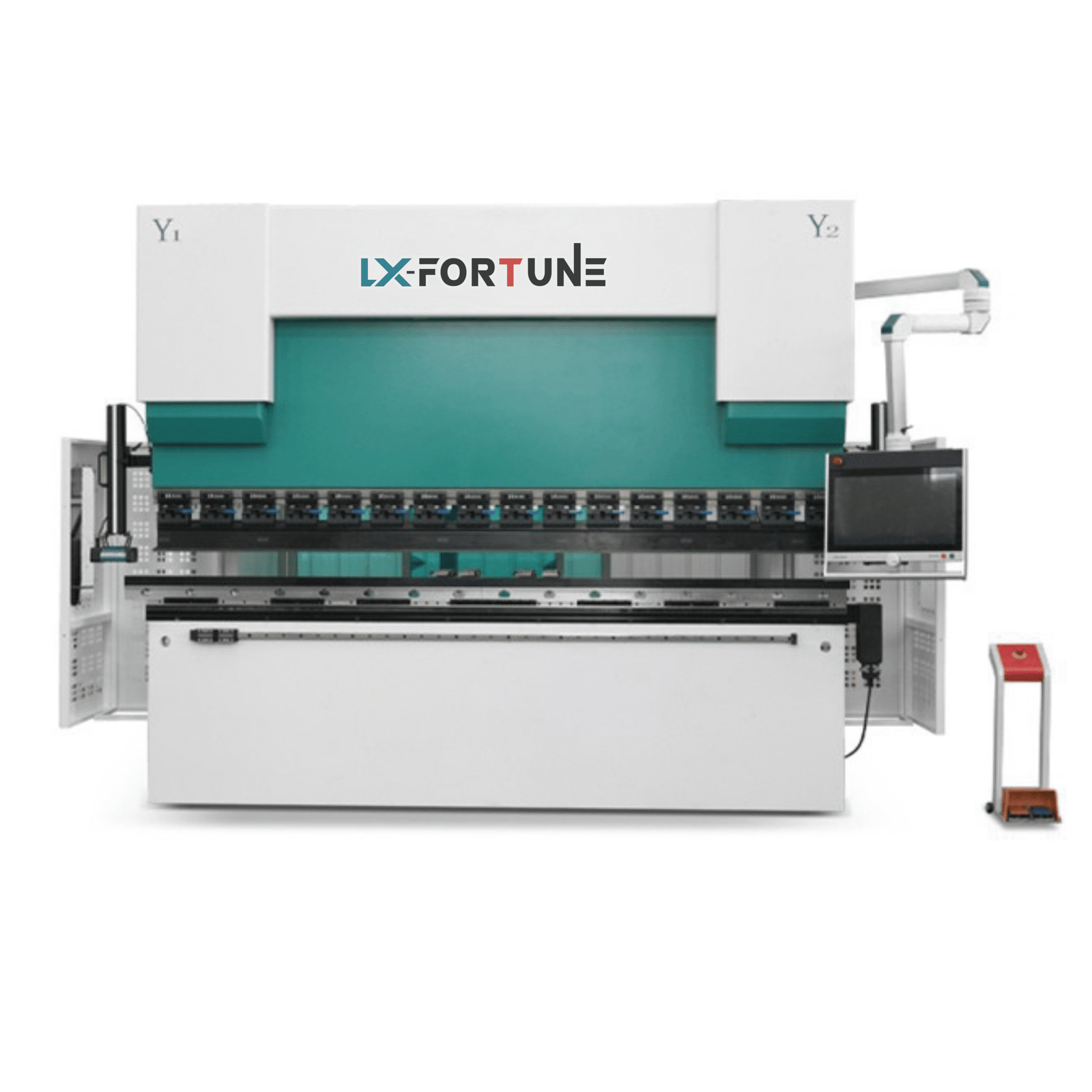
Hydraullic Sheet Bending Machine
A CNC bending machine (press brake) is a computer-controlled system used to bend and form sheet metal with high precision. It uses a hydraulic or electric press to drive a punch into a die, forcing the sheet metal between them to create accurate angles and shapes. The CNC (Computer Numerical Control) ensures programmed, repeatable, and consistent bending, ideal for complex or high-volume production.
How it works
-
Design: Parts are created in CAD software, which generates the machine’s bending instructions.
-
Setup: The operator installs the required punch and die, then inputs bending parameters into the CNC controller.
-
Bending: The sheet is positioned against the backgauge, and the CNC system moves the press to apply precise force and form the programmed angle.
-
Repeatability: Sensors and CNC adjustments ensure uniform, error-free bends across all pieces.
Key features & benefits
-
Precision: Computer control delivers high accuracy and consistency.
-
Versatility: Handles steel, aluminum, brass, and works for simple to highly complex bends.
-
Efficiency: Automation speeds production and reduces labor dependency.
-
Safety: Less manual handling enhances operator safety.
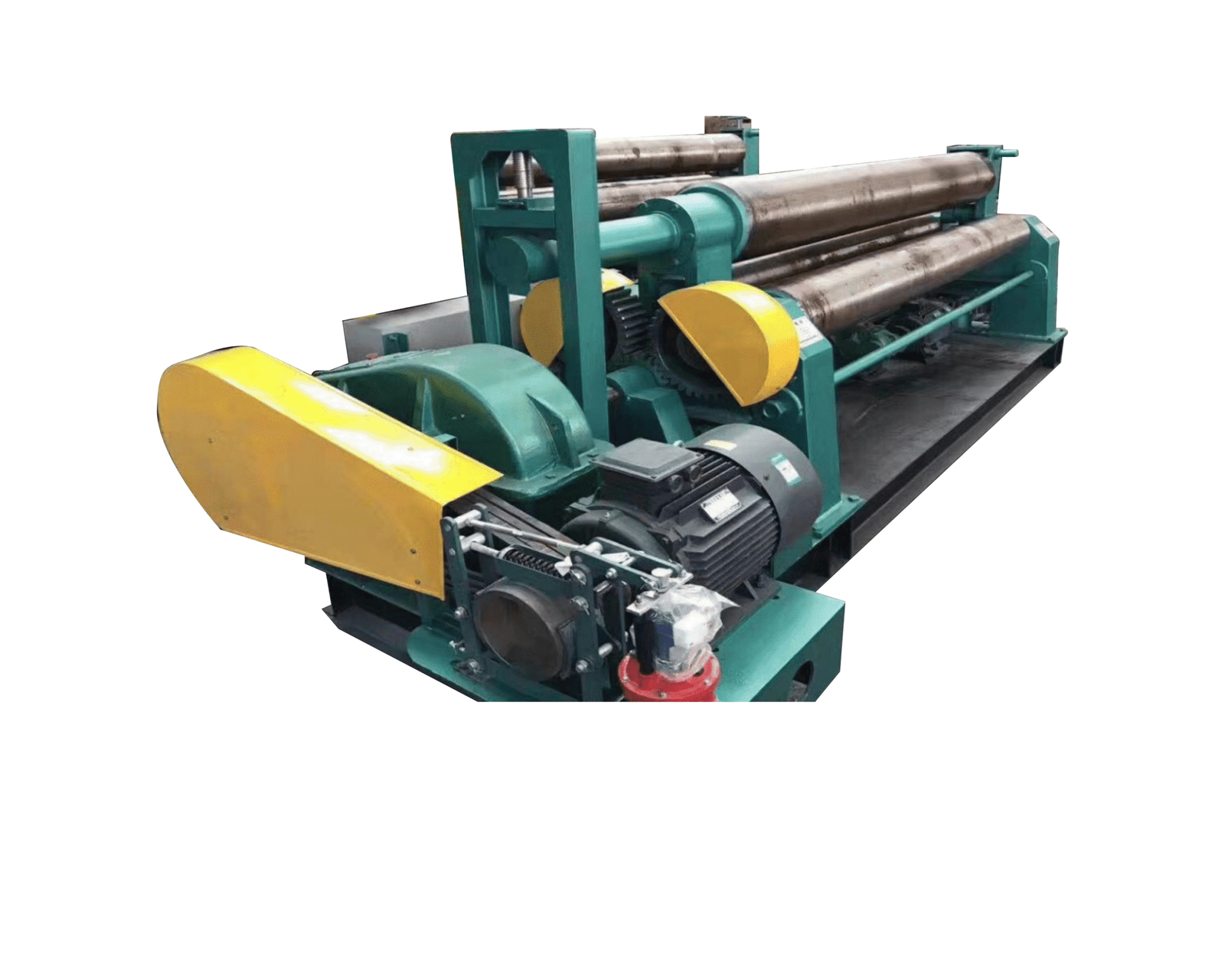
Plate / Metal Sheet Rolling Machine
Application Industries: Aerospace, shipbuilding, energy, wind tower manufacturingMaterials: Carbon steel, stainless steel, copper, aluminum, high-carbon steel
Key Features include :
Working Roller (42CrMo):
-Hollow Roller: For thin plates (≤6 mm)
-Solid Roller: For thicker plates
Hydraulic Pump:Stable, high-pressure output for smooth rolling operations.
Screw Mechanism :|Height-adjustment system using a screw-and-nut assembly for precise vertical movement.
Electrical Components:Equipped with Siemens for durability and reliable performance.
Lifting Worm Assembly:Smooth, flexible lifting for accurate positioning.
Hydraulic Motor :Easy installation and adjustment, strong performance, complete serviceability.
Reducer :Low backlash, high torque, high rigidity, low noise, high precision, long service life.
Cylinder :Provides stable pressure output, ensuring uniform bending and consistent rolling accuracy.
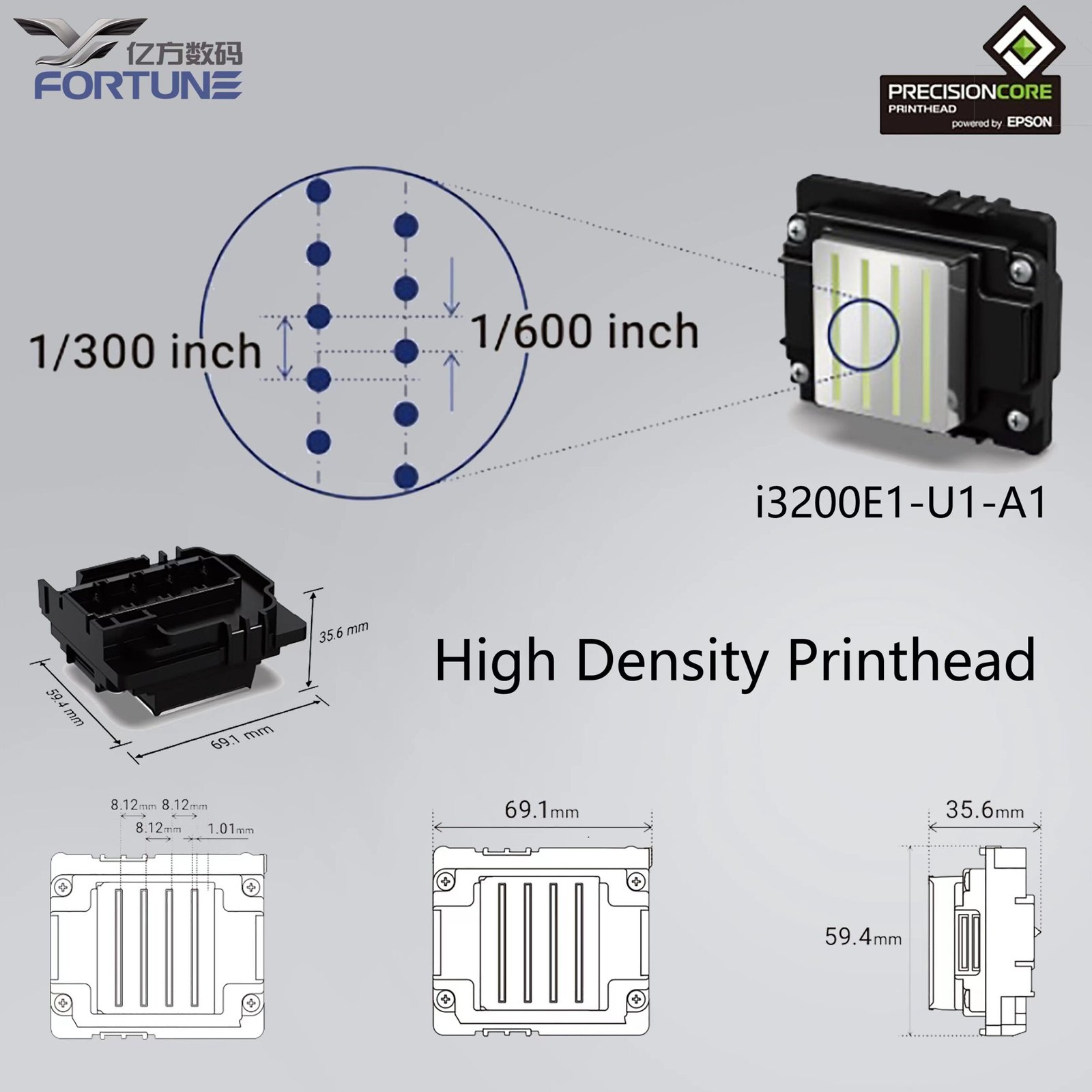
I3200
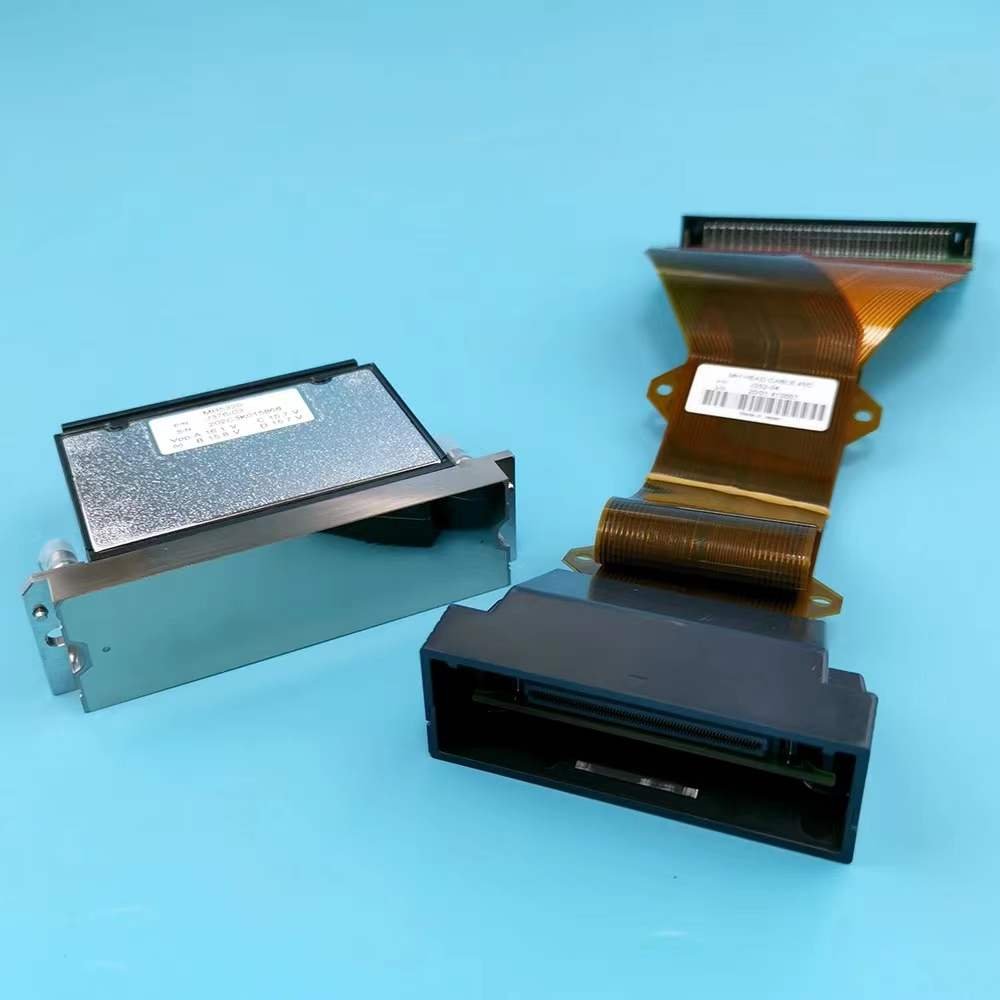
Gen6
- Technology Foundation: Uses advanced Piezoelectric technology, building upon the proven reliability of the Gen5 design with internal enhancements.
- Nozzle Configuration: Like the Gen5, it has 1,280 nozzles arranged in 4 rows, delivering 600 npi resolution.
- Key Upgrade: The primary difference from the Gen5 is the jump in firing frequency and the reduction in minimum drop size, directly translating to faster print speeds and higher apparent resolution.
- Robust Temperature Control: Features integrated heaters and thermistors for highly accurate temperature control, essential for reliable jetting of specialty, highly viscous inks like white and metallic formulas.
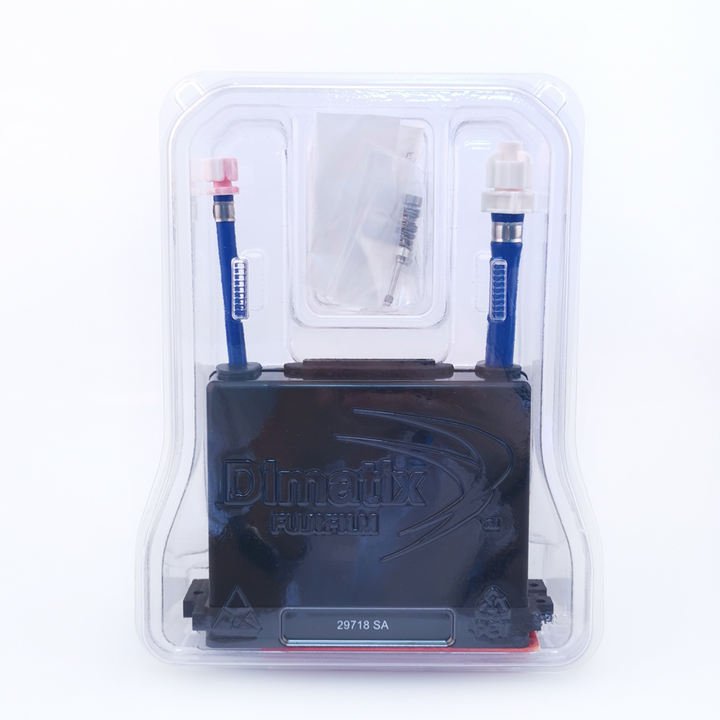
StarFire 1024
- Continuous Ink Recirculation: The StarFire 1024 features RediJet™ continuous ink recirculation right at the nozzle plate level, which helps eliminate bubbles and foreign objects in the ink, ensuring stable ink supply and reliable firing performance.
- Drop Size: Available in various drop sizes (e.g., 10 pL, 25 pL, 80 pL) to suit different application needs, from fine detail to high-coverage printing.
- Long Lifespan: The robust industrial design and repairable nature contribute to an average lifespan of 3 to 5 years, which is significantly longer than many non-industrial printheads.
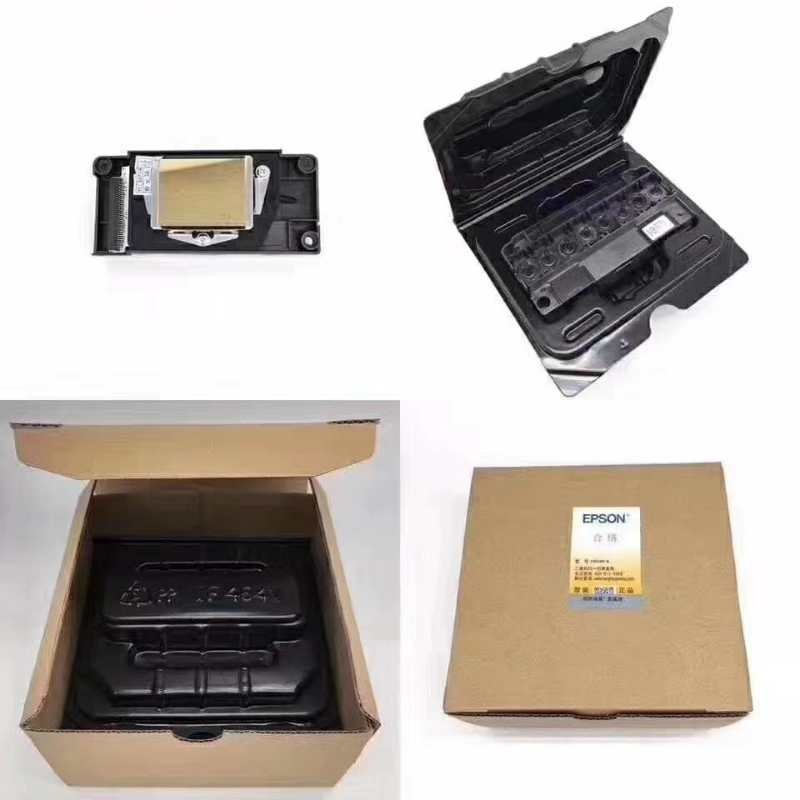
DX5
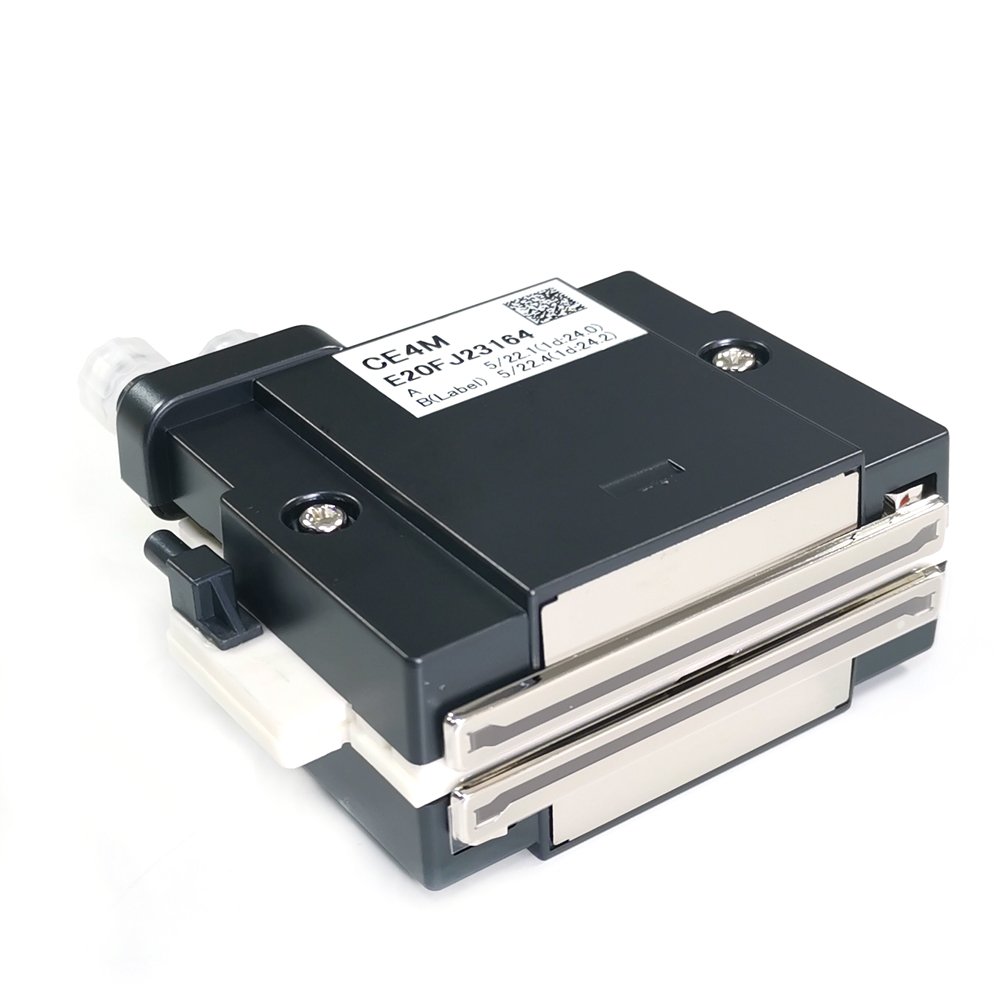
CE4
- Technology: Uses multi-drop grayscale micro-piezoelectric technology.
- Nozzle Configuration: It has 636 active nozzles with a native resolution of 150 d- 300 dpi depending on configuration/model.
- Drop Volume: The variable drop volume ranges from 5 picoliters up to 35 -90 pL, allowing significant control over ink coverage and detail.
- Temperature Control: A key feature is the sealed, integrated water channel within the chassis, which provides robust temperature control and stability for highly viscous inks.
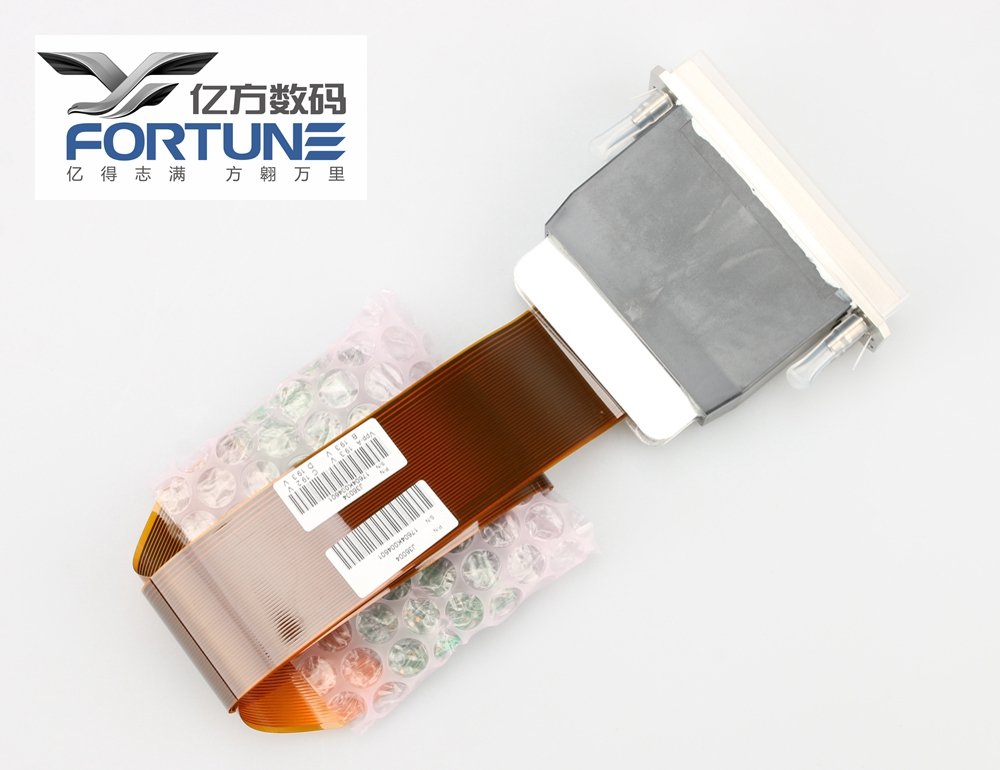
Gen5
- Technology Foundation: The Gen5 uses Piezoelectric (PZT) technology, but it is a more traditional, robust design compared to Epson's MicroTFP MEMS approach.
- Ruggedness and Lifespan: The Gen5 is famous for its durability. Its robust industrial design often translates to a longer lifespan in harsh operational environments compared to more delicate heads.
- Heater and Thermistor: The printhead includes integrated heaters and temperature sensors, allowing precise control over ink viscosity during jetting, which is vital for specialty inks like white and varnish.
- Drop Volume: It typically jets a larger minimum droplet size (around 7 picoliters) compared to the I3200 (3.8 picoliters), which contributes to its robust jetting performance but can slightly limit the absolute finest detail possible.
- Configuration: It is a dual-channel printhead with 1,280 nozzles (4 rows of 320 nozzles each) configured in two separate ink channels.
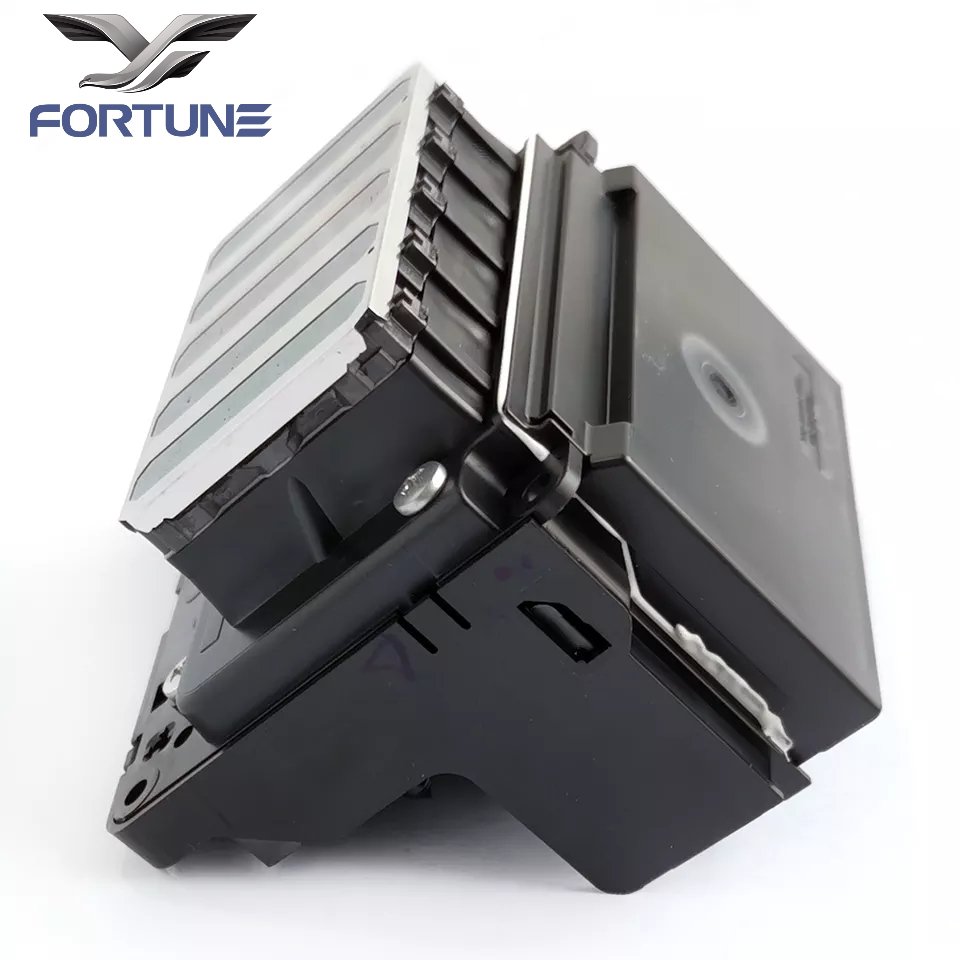
T3200
- Technology: Employs PrecisionCore MicroTFP (Micro Thin-Film Piezo) technology, leveraging MEMS manufacturing for high precision and durability.
- Built-in Heater: The T3200 was one of the first Epson PrecisionCore heads to feature an internal heating device, crucial for stabilizing highly viscous inks.
- Higher Throughput: The larger effective print width (2.65 inches vs. the I3200's 1.33 inches) significantly increases productivity per printhead.
- Drop Volume: Supports variable droplet technology (VSDT), with drop sizes generally larger than the I3200 (minimum around 6.2 picoliters for grayscale) to facilitate faster coverage and more robust jetting.
- No Recirculation: Unlike some high-end industrial heads like the Fujifilm StarFire, the Epson T3200 does not have built-in ink recirculation to the nozzle plate.
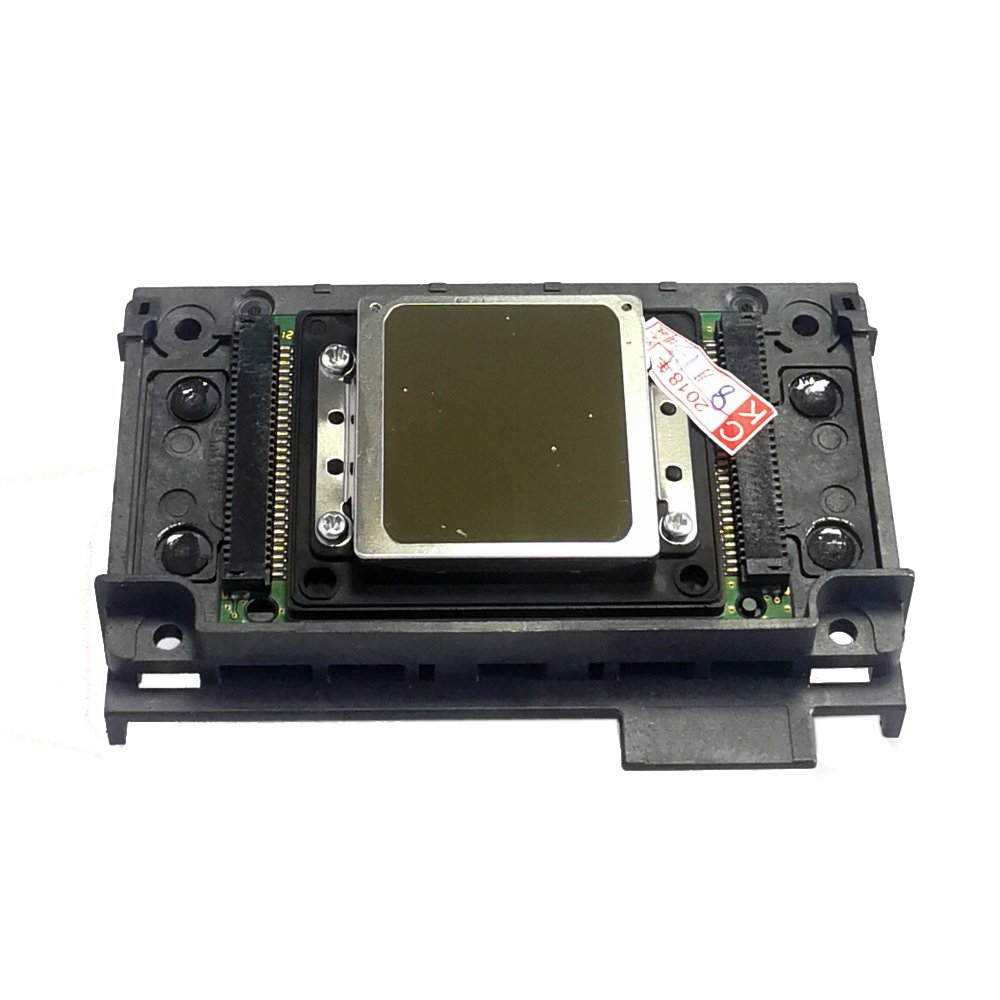
XP600
- Nozzle Count: The printhead has a total of 1080 nozzles arranged in 6 rows (180 nozzles for CMYK, 360 for light cyan/light magenta).
- Lifespan: The XP600 is fundamentally a consumer-grade, "disposable" printhead not built for continuous industrial use. Its typical lifespan in a commercial setting is relatively short, often cited as 3 to 6 months with proper maintenance.
- Cost-Effectiveness: Its primary appeal is its low replacement cost compared to dedicated industrial heads like the Ricoh Gen5 or Epson I3200 series.
- Lack of Industrial Features: It lacks industrial features like integrated ink recirculation to the nozzle plate or heavy-duty build quality, requiring more frequent maintenance and careful handling compared to the T3200 or StarFire heads.
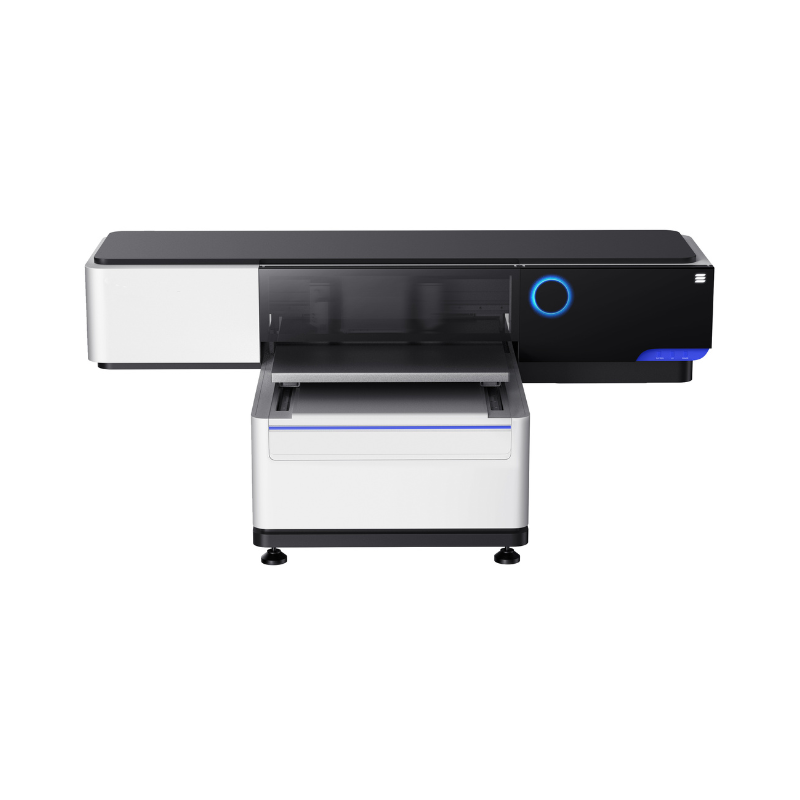
UV Flatbed Printer (60x90)cms
- EPSON i3200-U1
- ANTI-FEED SYSTEM
- MORE FLEXIBLE APPLICATION SCHEME
- SMART CONTROL PANEL
- HIGH COLOR AND IMAGE QUALITY
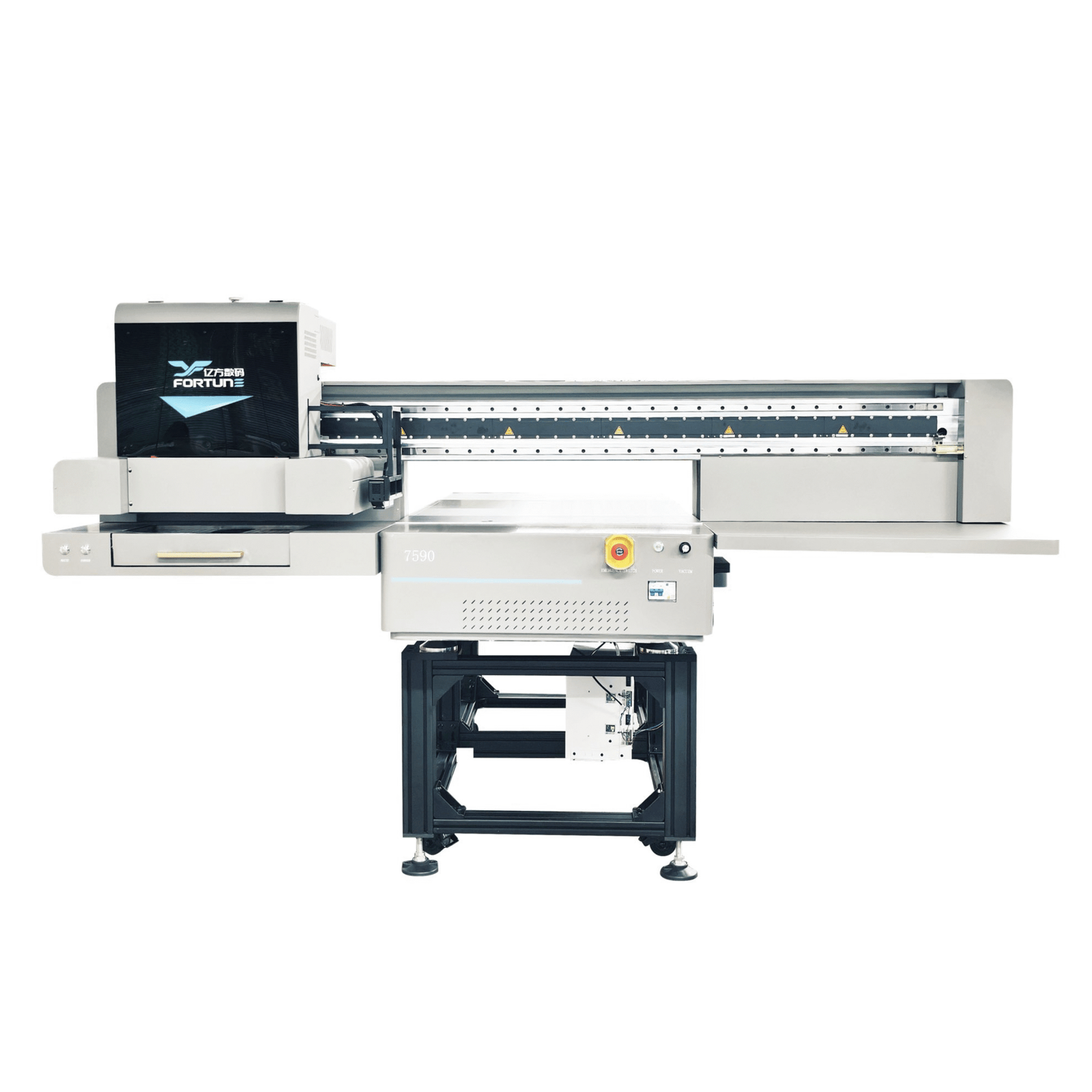
UV Flatbed Printer (75 x 90)cms
- RICOH AND EPSON PRINT HEAD
- HIGH PRECISION AND STABLE OUTPUT
- WHITE, COLOUR, VARNISH (OPTIONAL)
- HIGH-SENSITIVE ANTI-COLLISION SYSTEM
- LONGER SERVICE LIFE AND LOWER ENERGY CONSUMPTION